
St. Padre Pio: A Saint Who Walks with Us in Prayer and Suffering
- vikeshjoseph

- Sep 23, 2025
- 3 min read
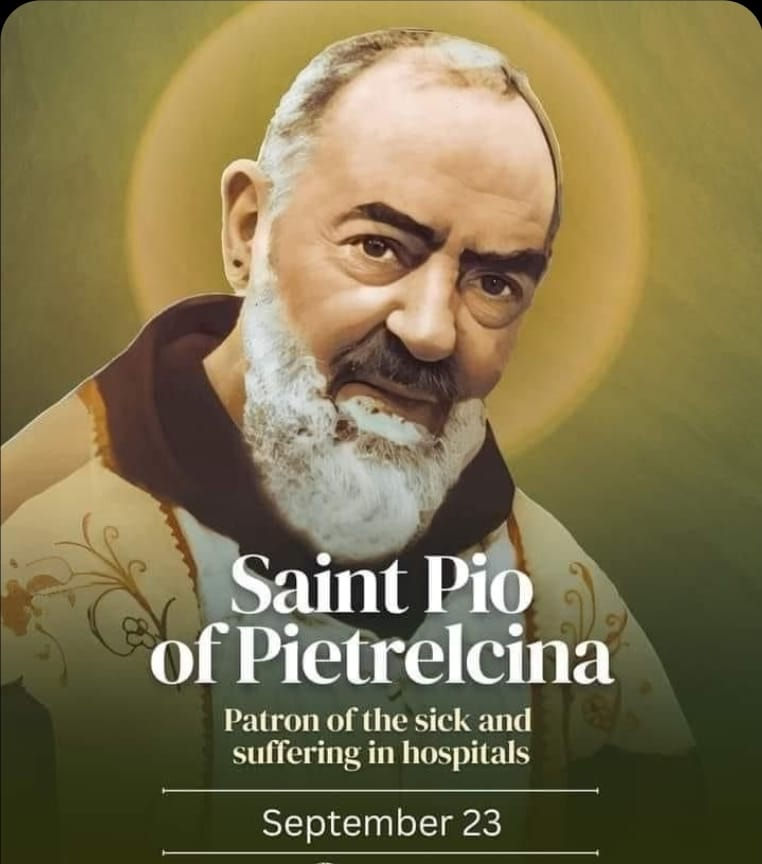
There are saints whose holiness seems distant, wrapped in history, but there are also saints who feel like companions on the journey—close, familiar, almost like family. For me, St. Padre Pio belongs to the second kind. He was a man of simple beginnings, a son of Pietrelcina, who became a friar hidden away in a small Capuchin monastery. Yet from that quiet place, the world was drawn to him as though heaven itself had planted a fire there that could not be hidden.
Padre Pio’s life was marked in a way that defies explanation. For fifty years, his hands, feet, and side bore the wounds of Christ. Imagine the weight of that mystery—waking each morning to pain, carrying it through Mass, through confessions, through prayer. And yet, he did not live in despair. His wounds were not curses; they were a gift of love, a sharing in the Passion of the Lord. Through them, Padre Pio became a living crucifix, reminding us that suffering embraced with faith is never wasted, but transformed into grace.
But if you ask me what made Padre Pio truly great, it was not the stigmata or the mystical visions that surrounded his life. It was his heart as a priest. Day after day, he sat in the confessional, sometimes sixteen hours without rest, hearing the sins of the faithful, guiding them, absolving them, sometimes rebuking firmly, but always with the love of a father. Thousands came to him, and many testified that he could see straight into their souls. But this gift was never for spectacle; it was for mercy. Padre Pio lived to reconcile God’s children, to remind them that no sin is greater than God’s love.
I often reflect on what it must have been like to confess to Padre Pio. To kneel there, burdened by guilt, and to encounter not judgment, but truth that liberates. His confessional was his pulpit, his sacred battlefield, his place of miracles. And as a priest myself, I find in him an example and a challenge—to approach this sacrament with the same reverence, patience, and dedication, knowing that each soul who enters is precious to God.
Beyond his priestly ministry, Padre Pio was above all a man of prayer. The rosary was always in his hands; he prayed it unceasingly, calling it his “weapon.” His prayer was not rushed or mechanical—it was a river flowing ceaselessly, carrying him into the heart of God. And he taught us by example that prayer is the anchor of the soul. When we pray, we are never alone, never lost, never powerless. His simple counsel still echoes across the world today: “Pray, hope, and don’t worry. Worry is useless. God is merciful and will hear your prayer.”
These words might sound simple, almost too simple for the complexity of life. But behind them is a wisdom born of suffering, obedience, and surrender. Padre Pio himself knew pain, misunderstanding, even persecution from within the Church. He was forbidden for years from publicly exercising some of his priestly ministries, yet he never turned bitter. Instead, he entrusted himself to God, trusting that God’s will would shine through in the end. That trust, I believe, is the essence of holiness.
And so, St. Padre Pio remains for me not just a saint of the past, but a living presence, a companion in my priesthood. When I sit in the confessional, I think of him. When I take the rosary in my hand, I hear his voice urging me onward. When my own heart grows restless, his words come back like a balm: pray, hope, and trust. He is a reminder that priesthood is about faithfulness, not fame; about surrender, not self.
Dear readers, Padre Pio’s life is not meant to intimidate us, as though holiness were reserved for a chosen few. It is meant to inspire us, to awaken us to the truth that we too are called to intimacy with Christ, to perseverance in prayer, to courage in suffering, and to joy in serving others. His story tells us that God can take even our wounds and turn them into doors of grace.
And so I pray:
St. Padre Pio, walk with us on our journey of faith. Teach us to pray without ceasing, to hope without doubting, and to love without measure. Show us how to carry our crosses with courage, and to trust that God’s mercy will always have the final word.


Comments